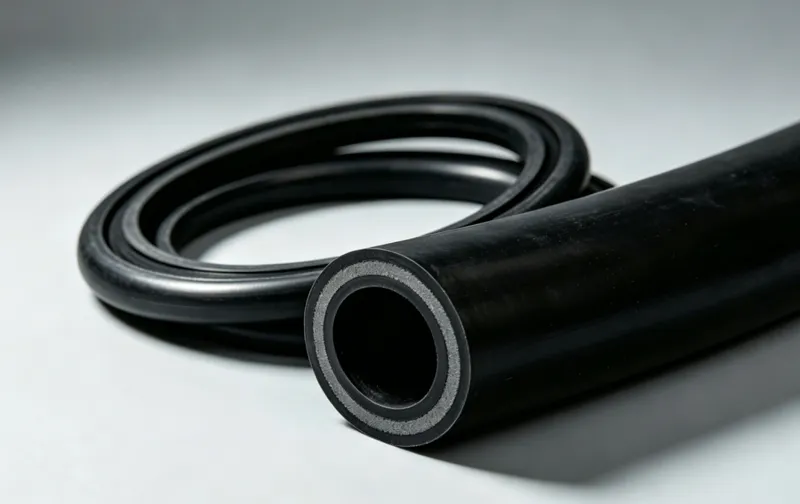
Most rubber accessories used in outdoor environments, such as construction seals, container rubber parts, automotive exterior strips, and outdoor mechanical buffers, face the same aging problems: surface cracking, hardening, elasticity loss, and sealing failure after long-term sun exposure and air oxidation. The two biggest killers of outdoor rubber products are ultraviolet (UV) radiation and ozone aging.
For overseas buyers, frequent replacement of aging rubber parts increases maintenance costs and affects product reputation. Therefore, improving ozone and UV resistance is the core solution to extend the service life of outdoor rubber accessories.
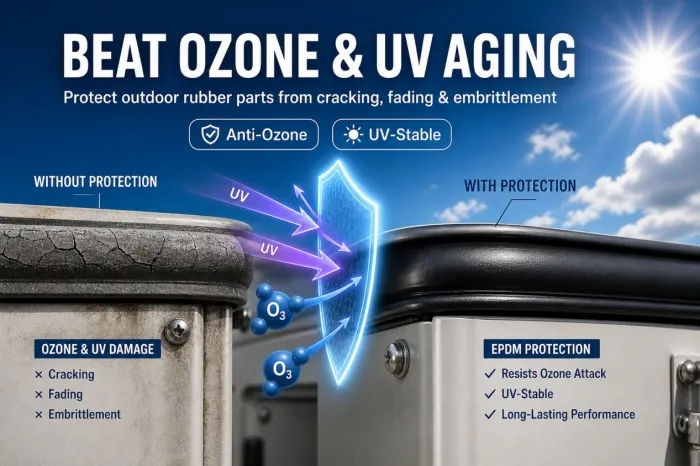
The molecular chains of ordinary rubber are easily broken by strong UV rays from sunlight. Meanwhile, outdoor ozone continuously oxidizes the rubber surface, causing micro cracks. Over time, the cracks expand, leading to aging, water leakage, air leakage, and complete functional failure.
Natural rubber and NBR rubber have poor outdoor aging resistance and are only suitable for indoor use. For long-term outdoor exposure, professional anti-aging rubber materials and optimized formulas are essential.
EPDM (Ethylene Propylene Diene Monomer) is the most mainstream outdoor rubber material. Its saturated molecular main chain enables excellent resistance to ozone, ultraviolet rays, and oxidation. It will not crack or harden after years of outdoor exposure.
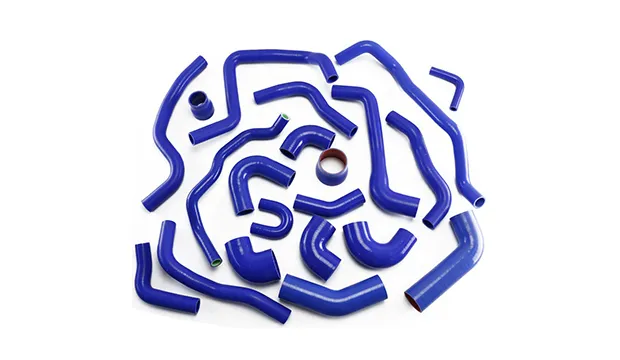
Silicone rubber also provides superior UV and weather resistance, suitable for high-end outdoor equipment and high-temperature outdoor scenes.
By adding anti-UV agents, anti-ozone additives, and aging-resistant formulations during compounding, we can further improve the outdoor durability of rubber products, achieving a service life of more than 10 years in open-air environments.
Select weather-resistant materials preferentially: Replace ordinary rubber with EPDM or silicone for outdoor components.
Custom anti-aging rubber formula: Add professional anti-UV and anti-ozone ingredients to reduce molecular oxidation.
Optimize product structure: Avoid long-term tension and extrusion on rubber surfaces to slow crack expansion.
Strict production vulcanization control: Adequate and uniform vulcanization improves the overall stability of rubber molecular structure.
Weather-resistant rubber parts are widely used in outdoor scenarios with high aging requirements:
Door, window, and curtain wall sealing strips for construction
Shipping container waterproof and dustproof rubber seals
Automotive exterior weather strips and sunroof seals
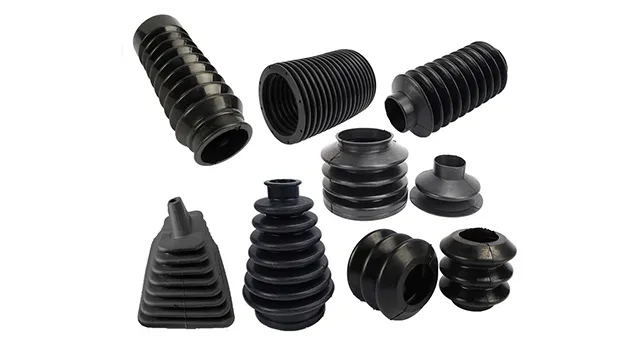
Outdoor mechanical equipment shock-absorbing and buffer rubber parts
We provide targeted formula optimization for outdoor rubber products. According to local climate conditions (strong sunlight, high humidity, coastal salt spray), we adjust rubber components to enhance UV resistance, ozone resistance, and weather stability. All customized outdoor rubber parts pass strict aging tests and meet European and American outdoor engineering standards.
If you need long-life outdoor rubber accessories with strong anti-aging performance, please contact us for a customized solution.