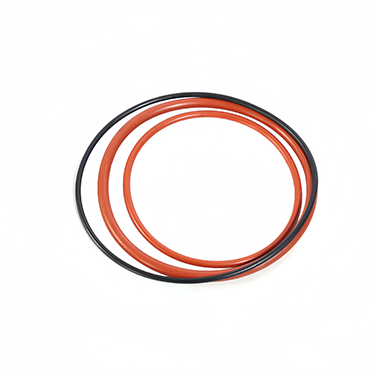
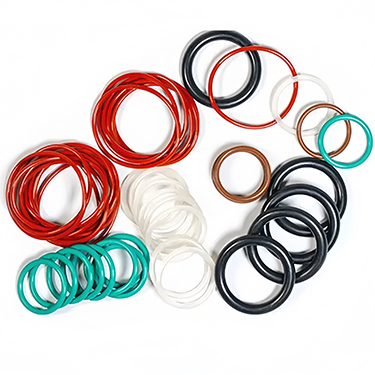
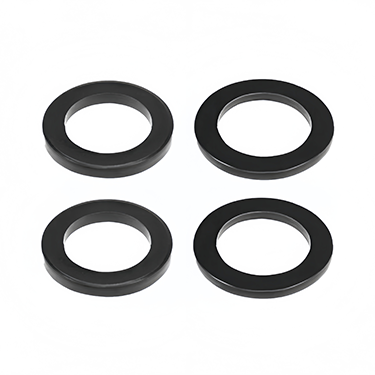
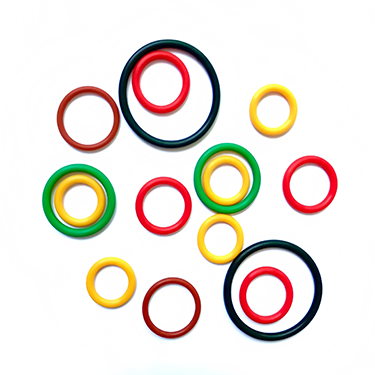
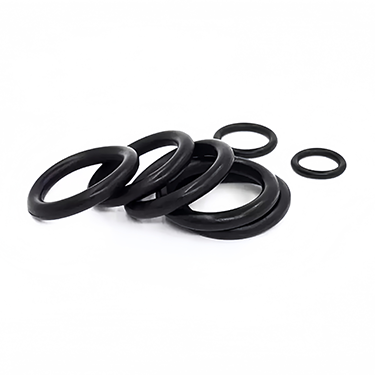
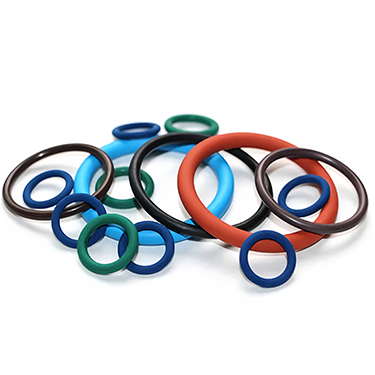
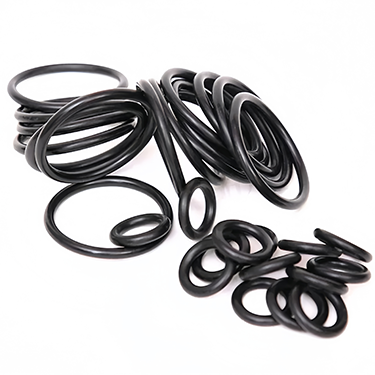
A rubber O ring is a donut-shaped mechanical gasket designed for static and dynamic applications. These rings are commonly used in various industries to prevent leaks and manage friction where parts move relative to each other.
Types of Rubber Used in O Rings
Rubber O rings are crafted from different materials based on the application’s requirements:
Nitrile Rubber (Buna-N): Ideal for oil and fuel resistance.
Viton (Fluoroelastomer): Exceptional chemical and heat resistance.
Silicone: Great for extreme temperature applications.
Other Synthetic Compounds: Offer tailored performance characteristics.
Rubber O rings are widely recognized for their:
Cost-Effectiveness: Affordable and accessible for many applications.
Easy Manufacturing: Simple to produce in various sizes and shapes.
High Dependability: Reliable sealing for multiple use cases.
Pressure Resilience: Effective in maintaining seals under high pressures.
Straightforward Installation: Quick and easy to install without specialized tools.
| 1 | Product Name: | Rubber O-ring | ||
| Other Name: | Nitrile O-ring (NBR), Fluoroelastomer O-ring (FKM/Viton), EPDM O-ring, Silicone O-ring (VMQ), HNBR O-ring, Neoprene O-ring (CR), High-Pressure O-ring, Vacuum O-ring, Conductive ESD O-ring, FDA-Compliant O-ring, Chemical-Resistant O-ring, AS568 O-ring Series 300, Metric EPDM O-ring, JIS B2401 O-ring, GB/T 3452.1 O-ring, ISO 3601-1 FKM O-ring, Square-Ring (Quad-Ring), X-Ring (Quad Seal), Metal-Insert O-ring, Clear Silicone O-ring, HNBR High-Pressure O-ring, FKM Vacuum O-ring, FDA Silicone O-ring, X-Ring EPDM Seal | |||
| 2 | Optional Materials | |||
| Material | Key Properties | Working Temp.(°C) | Hardness(Shore A) | |
| Nitrile Rubber (NBR) | Best cost-effective oil resistance; Strength increases with acrylonitrile content; Poor ozone resistance | -30 to 120 | 40–100 | |
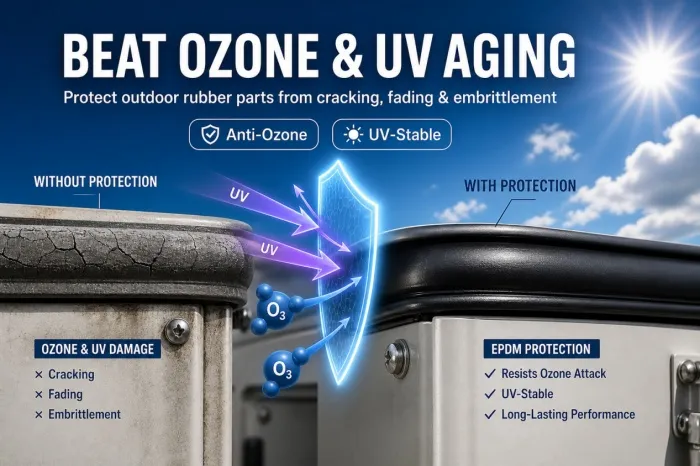
| Ethylene Propylene Diene Monomer (EPDM) | Best weathering/ozone resistance; Good steam/acid/alkali resistance; Poor oil resistance | -50 to 150 | 40–90 | |
| Fluorocarbon Rubber (FKM) | Best high-temp & chemical resistance (e.g., acids/oils); Low elasticity, expensive | -30 to 200 | 50–90 | |
| Silicone Rubber (VMQ) | Widest temp range, excellent insulation; Low strength, poor oil resistance | -100 to 250 | 20–80 | |
| Neoprene(CR) | Flame retardant, good weathering/ozone resistance; Moderate oil resistance | -40 to 120 | 40–95 | |
| Hydrogenated Nitrile Rubber (HNBR) | Superior oil/heat resistance vs. NBR; Excellent mechanical strength | -40 to 150 | 50–90 | |
| Acrylic Rubber (ACM/AEM) | Good heat/oil resistance (up to 175°C); Poor water/steam resistance | -20 to 175 | 40–80 | |
| 3 | Producing Technoly | |||
| 3.1 Pression Rubber Molding | ||||
| 4 | Use Cases | |||
| Automotive Industry | ||||
| Industrial Equipment and Machinery | ||||
| Electronics and Electrical Appliances | ||||
| Construction and Household Goods | ||||
| Healthcare and Food | ||||
| Aerospace and Maritime | ||||
| Daily Life and Personal Care | ||||

Take advantage of our network and see what SRRP can do for you.