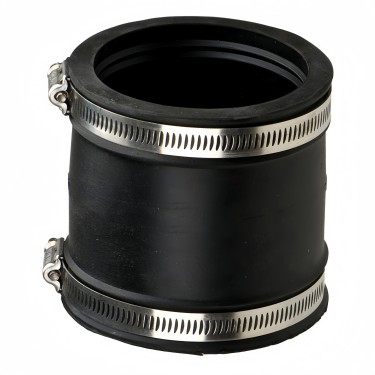
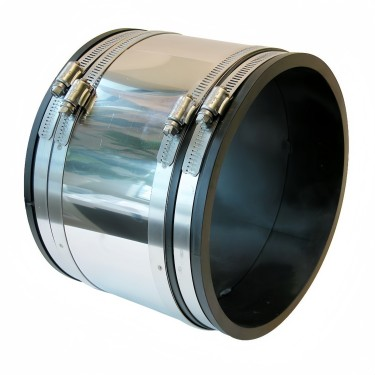
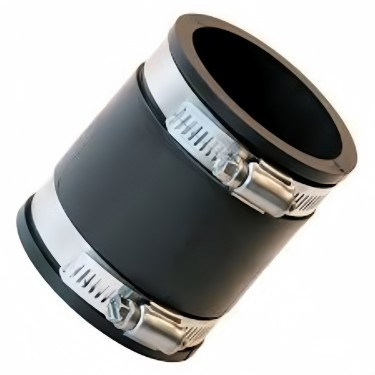
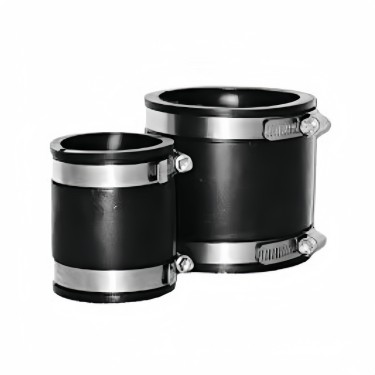
A rubber coupling is a highly versatile mechanical device designed to connect two shafts at their ends to efficiently transmit power between them. Crafted from natural or synthetic rubber, this coupling provides exceptional flexibility and elasticity, making it ideal for absorbing shocks, vibrations, and accommodating minor misalignments between shafts. As one of the experienced rubber coupling manufacturers, SunRise Rubber Plastic provides rubber couplings in diverse designs such as jaw, tire, and sleeve couplings, each engineered for specific applications and performance needs.
Rubber couplings are critical components in a variety of industrial and mechanical systems, offering reliable performance across multiple sectors:
1. Industrial Machinery
Rubber couplings are widely employed in applications such as pumps, compressors, and conveyors to connect driving motors with driven equipment. By reducing the transmission of shocks and vibrations, they play a vital role in safeguarding machinery and ensuring reliable operation.
2. Automotive Industry
These couplings are integral to vehicle drivetrains, effectively connecting the engine to the transmission or the transmission to the differential. They dampen engine vibrations, minimize noise levels, and ensure smoother performance.
3. Marine Applications
Rubber couplings are indispensable in marine engines, where they connect the engine with the propeller shaft. By absorbing vibrations from the engine and propeller, they ensure smoother and safer operation in demanding marine environments.
4. Power Generation
Used to connect turbines and generators in power plants, rubber couplings accommodate thermal expansion and misalignments, enhancing power transmission efficiency and maintaining overall system performance.
5. HVAC Systems
Heating, ventilation, and air conditioning systems rely on rubber couplings to link fans and blowers with motors. Their ability to reduce vibrations and noise ensures quieter and more efficient operation.
Rubber couplings offer numerous advantages, making them indispensable for a wide range of applications:
Vibration Damping
Rubber’s inherent properties allow it to absorb and dampen vibrations effectively, reducing wear and tear on connected machinery and prolonging equipment lifespan.
Shock Absorption
These couplings can absorb and cushion sudden loads or shocks, protecting connected systems from potential damage.
Misalignment Accommodation
Rubber couplings are designed to handle minor misalignments between connected shafts, simplifying installation and reducing alignment-related maintenance.
Noise Reduction
Thanks to the elasticity and insulating properties of rubber, these couplings significantly reduce noise, contributing to a quieter and more comfortable working environment.
Low Maintenance
With no moving parts that are prone to frequent wear, rubber couplings offer a nearly maintenance-free solution, lowering overall operational costs.
Cost-Effective
Their affordability compared to other coupling types makes rubber couplings an economical choice for businesses of all sizes.
Corrosion Resistance
Rubber is naturally resistant to corrosion, enabling these couplings to perform efficiently in harsh environments, including industries exposed to chemicals or extreme conditions.
At SunRise Rubber Plastic, we specialize in customizing rubber couplings in various sizes to perfectly suit your requirements. Compared with many standard rubber coupling manufacturers, we focus on flexible customization, stable quality, and application-specific solutions for industrial machinery, automotive systems, marine equipment, power generation, and HVAC systems.
Whether you’re seeking durable couplings for industrial machinery or specialized solutions for HVAC systems, our expert team is here to provide professional service and reliable products. If you are looking for reliable rubber coupling manufacturers for custom rubber coupling solutions, contact SunRise Rubber Plastic today and discover how our high-quality rubber couplings can elevate your operations.
| 1 | Product Name: | rubber coupling | ||
| Other Name: | Grooved Rubber Coupling, Flexible Rubber Coupling with Clamps, Clamp-Type Flexible Rubber Joint, Stainless Steel Clamp Rubber Joint, Grooved Flexible Pipe Connector, Quick-Install Rubber Coupling, Pipe Coupling, Flexible Pipe Coupling, Band-Seal Coupling, Pipe Repair Coupling, No-Hub Coupling, Transition Coupling, Shielded Coupling, Rubber Sleeve Coupling, Multi-Size Coupling Kit | |||
| 2 | Optional Materials | |||
| Material | Key Properties | Working Temp.(°C) | Hardness(Shore A) | |
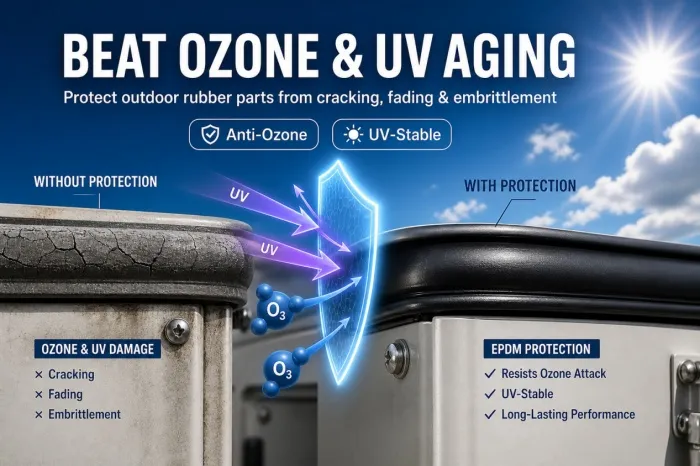
| Ethylene Propylene Diene Monomer (EPDM) | Best weathering/ozone resistance; Good steam/acid/alkali resistance; Poor oil resistance | -50 to 150 | 40–90 | |
| Nitrile Rubber (NBR) | Best cost-effective oil resistance; Strength increases with acrylonitrile content; Poor ozone resistance | -30 to 120 | 40–100 | |
| Chloroprene Rubber (CR) | Flame retardant, good weathering/ozone resistance; Moderate oil resistance | -40 to 120 | 40–95 | |
| Fluorocarbon Rubber (FKM) | Best high-temp & chemical resistance (e.g., acids/oils); Low elasticity, expensive | -30 to 200 | 50–90 | |
| Silicone Rubber (VMQ) | Widest temp range, excellent insulation; Low strength, poor oil resistance | -100 to 250 | 20–80 | |
| Natural Rubber (NR) | High elasticity, excellent tensile strength & abrasion resistance; Poor oil/ozone resistance | -60 to 80 | 40–90 | |
| 3 | Producing Technoly | |||
| 3.1 Pression Rubber Molding | ||||
| 4 | Use Cases | |||
| Industrial Equipment and Machinery | ||||
| Construction and Household Goods | ||||

Take advantage of our network and see what SRRP can do for you.