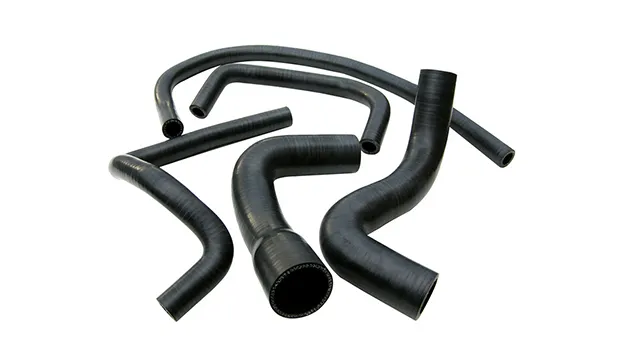
As a professional foreign trade supplier of rubber products, we know that choosing the right rubber material is the key to ensuring product quality and meeting application needs. Rubber materials are widely used in automotive, construction, electrical, industrial and other fields, with significant performance differences among different types. This article focuses on five common rubber materials—NR, EPDM, CR, NBR and Silicone Rubber—analyzes their advantages and disadvantages in detail, and matches their corresponding application scenarios, helping global buyers make more accurate purchasing decisions.
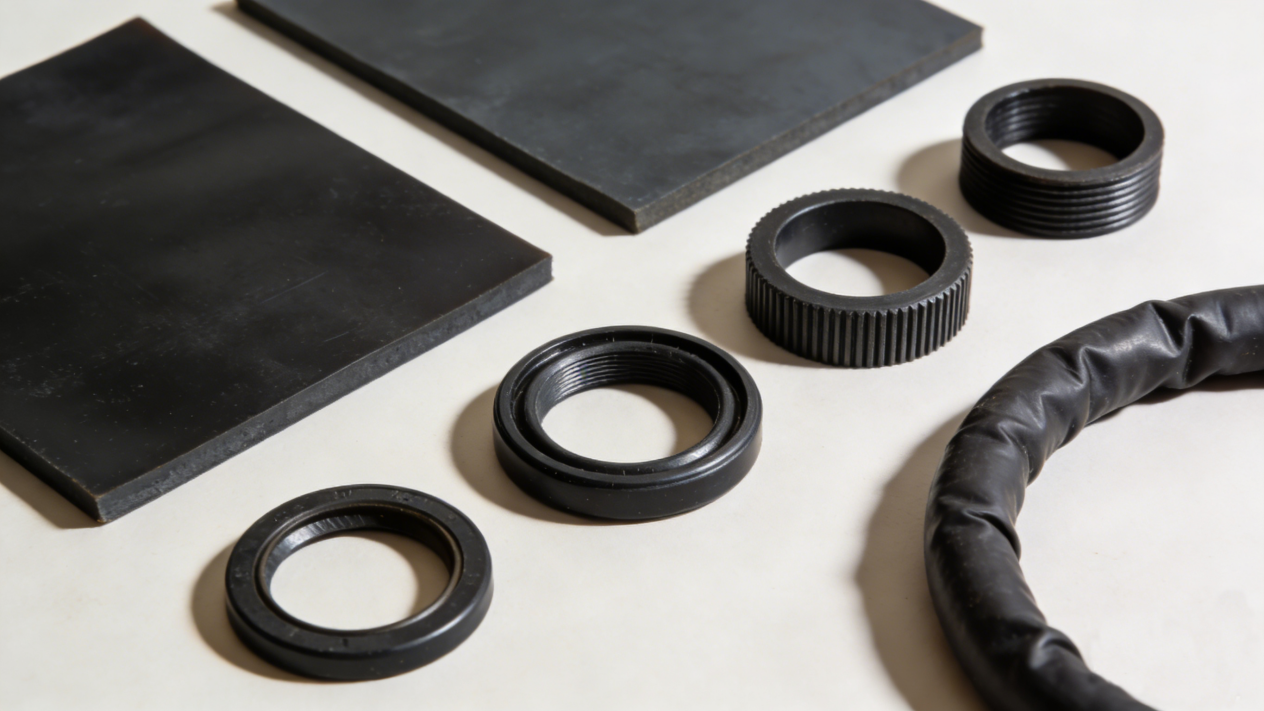
Natural rubber is a natural polymer material extracted from rubber trees, with a history of hundreds of years of application, and it is the most widely used basic rubber material.
Advantages: It has excellent elasticity, high tensile and tear strength, good wear resistance and cold resistance, and can maintain good flexibility at -50℃. It also has good adhesion, is easy to process and mold, and has low cost.
Disadvantages: Poor aging resistance, easy to age, harden and crack under long-term sunlight and ozone environment. It is not resistant to oil and organic solvents, and its performance will be significantly reduced when in contact with mineral oil and gasoline.
Applications: Suitable for products that do not require oil resistance and harsh aging environment, such as tires, rubber hoses, rubber belts, common seals, gloves and daily necessities.
EPDM is a synthetic rubber with excellent comprehensive performance, which is widely used in industrial fields in recent years.
Advantages: Outstanding aging resistance, ozone resistance and high temperature resistance, can work stably at -40℃ to 125℃. It has good chemical stability, water resistance and electrical insulation, and low density, which helps reduce product weight and production cost.
Disadvantages: Poor adhesion, difficult to bond with metals and fabrics, requiring special treatment. Poor oil resistance, not suitable for oil-contacting scenarios.
Applications: Automobile seals, waterproof membranes, electrical insulation parts, industrial gaskets, and building sealing strips, especially suitable for outdoor and high-temperature environments.
Chloroprene Rubber (CR), also known as neoprene, is a synthetic rubber with good comprehensive performance, famous for its excellent flame retardancy and weather resistance.
Advantages: Good flame retardancy, self-extinguishing after leaving the fire; excellent weather resistance, ozone resistance and aging resistance. It also has good oil resistance, wear resistance and adhesion to metals, fabrics and other materials.
Disadvantages: Poor low-temperature resistance, easy to brittle at -30℃ below; high cost compared with NR and EPDM, and poor storage stability.
Applications: Flame-retardant seals, conveyor belts, rubber hoses, waterproof coatings, adhesives, and automotive parts that require flame retardancy and weather resistance.
NBR is a synthetic rubber copolymerized by butadiene and acrylonitrile, which is famous for its excellent oil resistance.
Advantages: Excellent oil resistance, can resist mineral oil, gasoline, diesel and other oils; good wear resistance and tear strength, and certain water resistance and chemical stability.
Disadvantages: Poor low-temperature resistance, easy to brittle at -15℃ below; poor aging resistance and ozone resistance, which need to be improved by adding anti-aging agents.
Applications: Mainly used in oil-contacting products, such as oil seals, oil hoses, fuel tank linings, industrial oil-resistant gaskets and oil-resistant rubber gloves.
Silicone Rubber (SR) is a high-performance synthetic rubber with unique temperature resistance and environmental protection, suitable for high-end and special fields.
Advantages: Extremely wide temperature range, can work at -60℃ to 250℃, with excellent high and low temperature resistance. It is non-toxic, tasteless, environmentally friendly, and has good electrical insulation and weather resistance.
Disadvantages: High cost, low mechanical strength, poor wear resistance, not suitable for products requiring high load-bearing and wear resistance.
Applications: Medical devices, food quality rubber products, automotive high-temperature parts, electrical insulation components, and daily necessities requiring environmental protection and high temperature resistance.
Each of the five rubber materials above has its own characteristics, and there is no absolute advantage or disadvantage. The key is to match the application scenario and actual needs. As your trusted rubber products foreign trade supplier, we can provide customized products according to your material requirements, and offer professional suggestions to help you reduce costs and improve product competitiveness. If you have any questions about rubber materials or product customization, please feel free to contact us: Sales@srrp.cpm.cn.