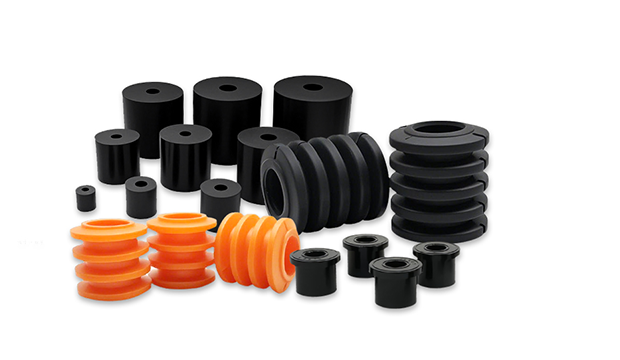
The blend of Styrene-Butadiene Rubber (SBR) and Nitrile Butadiene Rubber (NBR) is an economical formula that "balances wear resistance, oil resistance and cost" in the industrial field. It does not require high-end equipment, has low processing difficulty, and is suitable for mass production by small and medium-sized enterprises. It is also one of the most widely used "general-purpose synthetic rubber blending schemes" in the industry, with outstanding cost performance.
- Styrene-Butadiene Rubber (SBR): Low cost, good wear resistance, excellent processing performance, and strong versatility. Its disadvantages are poor oil resistance and general aging resistance, which is suitable for ordinary industrial products.
- Nitrile Butadiene Rubber (NBR): Excellent oil resistance and high mechanical strength. Its disadvantage is that the cost is higher than that of SBR, the processing performance is general, and the weather resistance is poor.
1. Significantly Improved Oil Resistance: Compared with pure SBR, the oil resistance of the blended formula is significantly improved, which can withstand mild to moderate oil environments (such as mechanical lubricating oil and light diesel), solving the problem of swelling of pure SBR when encountering oil.
2. Stable Wear Resistance: It retains the high wear resistance of SBR, and at the same time, with the strength of NBR, it improves the wear resistance and tear resistance of products, which is more wear-resistant and durable than pure NBR.
3. Greatly Reduced Cost: Replacing part of NBR with SBR can reduce the raw material cost by 15%-30% without affecting the core performance, which is suitable for mass production and cost-sensitive products.
4. Optimized Processing Performance: SBR's good processability improves NBR's problems of difficult mixing and easy sticking to the mold. After blending, conventional processing technology can be adopted, reducing the production threshold.
- Common Ratios: SBR/NBR = 50/50 (balancing oil resistance, wear resistance and cost, most commonly used); 60/40 (focus on wear resistance and cost, suitable for mild oil-resistant scenarios); 40/60 (focus on oil resistance, suitable for moderate oil-resistant scenarios).
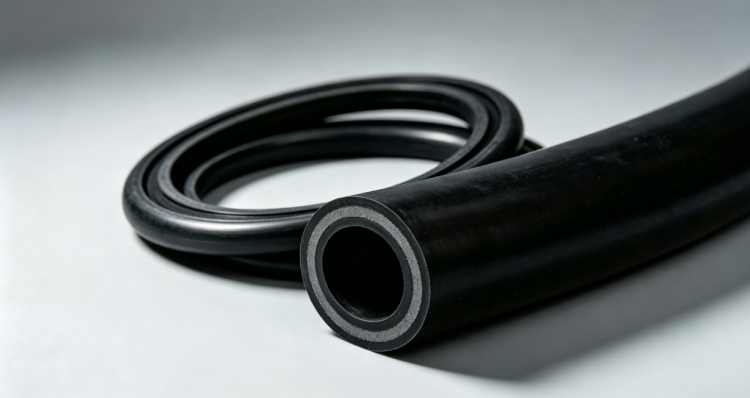
- Typical Applications: Mechanical seals (such as spindle seals of small machine tools, which can withstand mild erosion of machine tool lubricating oil, and ensure wear resistance and reliable sealing, adapting to the mass production needs of small and medium-sized enterprises); Ordinary oil-resistant hoses (such as agricultural machinery hydraulic hoses and small air compressor oil delivery hoses, which do not require high-end oil resistance, balancing cost and practicality); Rubber gaskets (sealing gaskets for industrial pipelines and valves, which can withstand mild oil pollution, have high cost performance, and are suitable for daily production of small and medium-sized enterprises); Gear shields (gear protective sleeves of small machinery, wear-resistant and resistant to mild oil pollution, preventing gear wear and oil leakage); Small wear-resistant and oil-resistant rubber accessories (such as brake pads and pedal rubber sleeves of bicycles and electric vehicles, balancing wear resistance and oil resistance, with controllable cost).
The core of this blended formula is "cost performance". It is suitable for scenarios that have basic requirements for oil resistance and wear resistance but limited budget. It is the "preferred general formula" for small and medium-sized rubber enterprises, balancing practicality and economy.