In chemical and industrial piping systems, material selection is often the difference between years of stable operation and unexpected shutdowns. Choosing the right rubber expansion bellows is not just about size and movement — it is about chemical compatibility, temperature cycling, pressure pulses, and long-term aging behavior. This guide explains how to evaluate elastomer options and what to confirm when sourcing from a rubber bellow China supplier for demanding process environments.
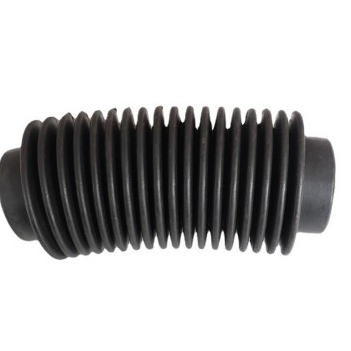
| Challenge | Impact on Bellows Selection |
|---|---|
| Wider chemical mixes in single lines | One elastomer may no longer suit all media — blended or multi-service lines require careful review |
| Higher CIP temperatures | Cleaning-in-place chemicals at elevated temperature are more aggressive than steady-state process media |
| More aggressive oxidizing agents | Bleach-based and peroxide cleaners attack many common elastomers rapidly |
| Variable concentration | Diluted acids or solvents may be acceptable; concentrated forms of the same chemical may not be |
Swelling: elastomer absorbs the media and loses dimensional stability — joints leak at flanges
Softening: chemical degradation reduces Shore hardness and load-bearing capability
Cracking: oxidative or ozone attack on the outer surface, particularly at the arch roots
Blistering: surface delamination from internal vapor pressure at elevated temperature
Flange face damage: chemical attack concentrated at the sealing surface
"Rubber" is not a material specification. EPDM, NBR, Neoprene, and FKM are chemically and mechanically different compounds that behave very differently in service. Specifying "rubber bellows" without confirming the elastomer type is like specifying "metal pipe" without confirming the alloy.
| Elastomer | Chemical Family It Handles Well | Avoid When | Temperature Range |
|---|---|---|---|
| EPDM | Hot water, steam (moderate), dilute acids, ozone/weather exposure, polar solvents | Oils, fuels, hydrocarbons — swells rapidly | -40°C to +150°C typical |
| NBR (Nitrile) | Oils, fuels, hydrocarbons, grease | Strong acids, oxidizers, ozone, polar solvents | -30°C to +120°C typical |
| Neoprene (CR) | General-purpose; good ozone and weather resistance, moderate chemical tolerance | Concentrated acids, strong oxidizers, aromatic solvents | -40°C to +120°C typical |
| FKM (Viton) | Broad chemical resistance — acids, fuels, solvents, high-temperature service | Low-temperature flexibility; cost-sensitive applications | -20°C to +200°C typical |
A rubber bellow China supplier cannot give an accurate material recommendation without the following information:
Complete media list including all chemicals the bellows will contact — process fluids and cleaning agents
Chemical concentration as a percentage — dilute and concentrated forms behave differently
Operating temperature and peak temperature (including CIP or steam sterilization peaks)
Exposure duration — continuous versus intermittent changes the degradatio n rate
Pressure range including surge and vacuum if applicable
| Component | Function | What to Specify |
|---|---|---|
| Inner liner | First contact with the process media | Must be the chemically compatible elastomer — not masked by outer layers |
| Fabric reinforcement | Provides structural integrity under pressure and movement | Layer count and fabric type affect pressure rating and flexibility |
| Outer cover | Protects from UV, ozone, and physical damage | Confirm suitability for outdoor or chemically aggressive atmosphere |
| Arch shape | Determines movement capacity | Single-arch for compact movement; multi-arch for larger axial and lateral range |
| Flange type | Connection to piping | Confirm flange standard (ANSI, DIN, JIS), face type, and bolt circle |
| Design | Movement Capacity | Pressure Rating | Best Application |
|---|---|---|---|
| Single sphere | High lateral and angular | Moderate | General piping; pump connections |
| Double sphere | Higher movement absorption | Lower per sphere | Systems with significant vibration |
| Multi-arch (spool) | High axial movement | Moderate | Thermal expansion in long lines |
Rated working pressure and test pressure
Vacuum resistance — chemical lines frequently experience negative pressure during draining or suction
Movement limits: axial compression and extension, lateral offset, angular deflection
Face-to-face dimensions and whether control rods are included or required
Always use control rods at rated pressure to prevent over-extension
Do not pre-compress or pre-extend the bellows at installation — install at neutral length
Confirm alignment — lateral misalignment at installation consumes movement capacity and accelerates fatigue
Follow the bolt torque sequence on flanges — uneven torque causes flange face distortion and leaks
| Document | What It Confirms |
|---|---|
| Compound specification | Elastomer type, Shore A hardness, tensile strength, elongation at break |
| Aging test results | Retained properties after thermal aging — confirms long-term stability |
| Pressure test record | Each bellow tested at a defined proof pressure before shipment |
| Leak test record | Confirms joint integrity at operating pressure |
| Dimensional inspection | Face-to-face, OD, ID, and flange dimensions within tolerance |
| Batch lot code | Links each bellow to its production run and compound batch |
A capable Custom Rubber Moulding Parts and Products Manufactuer should be able to:
Provide a chemical resistance guide for each elastomer type
Review your media list and flag any incompatibilities or borderline cases
Offer sample validation — providing a compound sample for immersion testing in your specific media before ordering production bellows
Recommend compound modifications (such as peroxide-cured EPDM versus sulfur-cured) for aggressive service conditions
Request a QC inspection record with each shipment — not a generic product datasheet. The record should cover the specific batch, the test results for that batch, and the lot code that appears on the product marking. This creates a traceable chain from production to installation that supports warranty claims if failures occur.
| Step | Action | Output |
|---|---|---|
| 1. List all media | Document every fluid, cleaning agent, and gas the bellows will contact | Complete media and concentration list |
| 2. Define conditions | Temperature range, peak temperature, pressure range, vacuum exposure, cycle frequency | Operating envelope for material selection |
| 3. Define movement | Axial, lateral, and angular movement expected in normal and upset conditions | Movement specification for arch design selection |
| 4. Match elastomer | Cross-reference media list against elastomer compatibility data | Shortlist of compatible elastomers |
| 5. Select construction | Match arch design and reinforcement to pressure and movement | Complete technical specification |
| 6. Sample validation | Request compound samples; run immersion test if media is unusual or aggressive | Confirmed compatibility before order |
| 7. Pilot installation | Install in a non-critical line or a single pilot unit before full fleet order | Operational validation before scale |
Keep at least one spare bellow per critical pump or compressor connection — rubber bellows are wear components with a finite service life
Define an inspection interval based on operating severity — visual inspection for surface cracking, swelling, and flange seal condition
Replace before failure on critical lines — a planned replacement is significantly less costly than an emergency shutdown and leak response
In 2026's chemical environments, selecting rubber expansion bellows is an engineering decision — not a commodity purchase. When you match elastomer chemistry to your media list, confirm construction details for your pressure and movement requirements, and validate with a capable rubber bellow China supplier who provides compound data and QA records, you dramatically reduce leak risk and unplanned downtime.
Q1: Which rubber expansion bellows material is best for chemical service?
There is no single best material — the correct elastomer depends on the specific chemicals, concentrations, and temperatures involved. FKM (Viton) handles the widest range of chemicals at higher temperatures but carries a cost premium. EPDM suits hot water, steam, and polar solvents. NBR is the standard for oil and hydrocarbon service. Provide your full media list to get an accurate recommendation.
Q2: Can I select a bellows material based on temperature alone?
No. Temperature resistance and chemical resistance are independent properties. EPDM handles high temperatures well but fails rapidly in oils and fuels. NBR tolerates hydrocarbons but degrades in ozone and strong oxidizers. Both temperature and chemical compatibility must be confirmed for the specific application.
Q3: What information should I send a rubber bellow China supplier for material selection?
Complete media list with chemical names and concentrations, operating temperature and peak temperature including CIP or sterilization cycles, operating pressure and any vacuum or surge conditions, required movement in axial, lateral, and angular directions, flange size and standard, and installation orientation.
Q4: What causes rubber bellows to fail prematurely in chemical lines?
The most common causes are incorrect elastomer selection for the specific chemical exposure, mechanical over-extension or compression beyond rated movement limits, installation misalignment that creates sustained stress on the arch, pressure surges that exceed the rated working pressure, and failure to replace aging bellows before the end of their service life.
Q5: Are control rods always required with rubber expansion bellows?
Control rods are typically required when the bellows is installed in a system where the line pressure could extend the bellows beyond its rated movement limit. They protect the joint from over-extension and limit flange separation under pressure. Whether they are required depends on the operating pressure, the rated movement of the specific bellows design, and the manufacturer's installation guidance for your application.