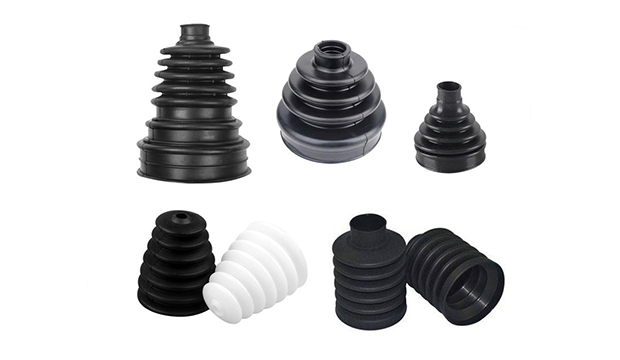
Nobody budgets for a line stoppage caused by a rubber plug.
Yet in 2026, that is exactly what happens when rubber stoppers are treated as an afterthought: a last-minute hole spec gets sent to a supplier, the tooling comes back with a shrinkage mismatch, insertion force is too high for the assembly line, and suddenly a sealing part that costs cents is holding up a product that costs thousands. Multiply this across higher SKU counts, shorter product cycles, and less tolerance for line stoppages, and the "simple consumable" becomes a recurring project risk.
The solution is not more expensive tooling—it is smarter specification. By standardizing geometry, choosing the right compound for the environment, and using a staged tooling approach, custom rubber stoppers can be sourced faster, at lower total cost, and with fewer late-stage surprises. This guide shows you how.
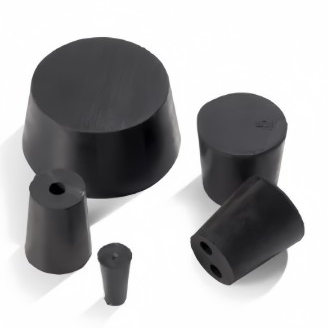
Before optimizing procurement, it helps to understand exactly what a rubber stopper is doing in service—because the sealing mechanism determines which dimensions are critical and which material properties matter most.
Rubber stoppers serve multiple roles across industrial applications:
Hole sealing: closing unused ports, drilled passages, and punched holes against dust, moisture, and fluid ingress
Masking during surface treatment: protecting threads, bores, and precision surfaces during powder coating, anodizing, painting, or plating
Port protection during transit and storage: preventing contamination of hydraulic, pneumatic, and fluid system ports between manufacture and assembly
Fluid containment: maintaining liquid-tight closures in hydraulic reservoirs, pneumatic manifolds, and chemical storage components
A rubber stopper creates a seal through interference fit: the stopper's insertion diameter is slightly larger than the hole, so the elastomer compresses when installed. This compression creates continuous radial contact pressure against the hole wall. Ribs and flanges amplify this effect by concentrating contact pressure at defined points and providing mechanical retention against pull-out forces.
The sealing performance is a direct function of:
The interference magnitude (difference between stopper OD and hole diameter)
The elastomer's compression set resistance (how well it maintains contact pressure over time and temperature)
The surface finish of the hole wall (rough surfaces reduce effective contact area)
Shrinkage and tolerance mismatch Rubber compounds shrink during curing. If the mold is cut without correctly accounting for compound-specific shrinkage, the finished stopper OD will be systematically off-nominal—producing either loose fit (insufficient sealing) or interference so high that insertion damages the part or requires unacceptable assembly force.
Wrong elastomer for the environment An EPDM stopper in a hydraulic oil environment will swell, losing its dimensional integrity and sealing performance. An NBR stopper in an ozone-rich outdoor environment will crack. Material selection must match the actual operating environment—not just the temperature.
Tooling shortcuts Molds produced without proper draft, adequate venting, or controlled parting line placement produce parts with flash, parting-line misregistration, and dimensional scatter that create assembly problems and field failures.
Defining these parameters completely before tooling begins eliminates the most common and most expensive sourcing problem: re-tooling because a critical dimension was undefined or assumed incorrectly.
| Parameter | What to Define | Why It Matters |
|---|---|---|
| Hole diameter | Nominal + bilateral tolerance | Determines interference fit and insertion force |
| Hole shape | Round, oval, rectangular, threaded | Non-round profiles require custom mold geometry |
| Panel thickness | Min and max in tolerance | Determines head flange position for retention |
| Edge condition | Punched, drilled, chamfered, radiused | Sharp edges require deeper insertion lip; chamfered edges allow easier insertion |
| Surface finish | Ra value if critical | Affects sealing contact area |
Insertion depth: how far the stopper must enter the hole for the head flange to seat correctly
Head style: flush for aesthetic or clearance requirements; pull-tab for frequent removal; flanged for positive retention
Ribs and barbs: rib count, height, and spacing determine retention force and the trade-off against insertion force
Venting: if pressure equalization is required (some sealed enclosures need vent-equipped stoppers), this must be specified as a geometry feature, not added later
| Material | Temperature Range | Chemical Resistance | Best Application |
|---|---|---|---|
| EPDM | -40°C to +120°C | Water, steam, UV, ozone | Outdoor enclosures, water exposure |
| Silicone | -60°C to +180°C | Heat, UV, some solvents | High-temp masking, food/medical |
| NBR | -30°C to +100°C | Oils, fuels, hydraulic fluids | Hydraulic/pneumatic systems |
| Neoprene | -40°C to +100°C | General chemicals, moderate oils | General industrial |
Hardness specification (Shore A) determines both sealing performance and insertion/pull-out force balance. Harder compounds (60–70 Shore A) provide better retention; softer compounds (40–50 Shore A) are easier to insert and provide better conformance to irregular surfaces.
Sealing level: dust protection (IP5X) vs splash resistance (IP6X) vs immersion (IP67/68)
Pull-out force minimum: prevents accidental removal in service
Maximum insertion force: determines assembly method—manual, tooled, or automated insertion
Operating temperature range: continuous vs. peak excursion
Dimensional tolerances: which dimensions are critical-to-fit (CTF) and require tight tolerance; which are non-critical
AQL level: sampling plan for incoming inspection
Appearance limits: acceptable flash height, parting-line offset, void size, and surface tear criteria
Lot traceability: batch coding and documentation requirements for controlled production programs
The right tooling strategy depends on the application context—specifically, the volume, the dimensional criticality, and the consequence of a fit or sealing failure in service.
IP-rated sealing for unused port openings in control cabinets, junction boxes, and electronic housings requires consistent stopper geometry across production lots. Temperature aging resistance is critical—a stopper that hardens and loses compression set resistance over three years of enclosure service will allow moisture intrusion that generates warranty claims long after the original installation. EPDM is the standard material selection; silicone where higher temperature resistance is needed.
Vibration resistance and fluid exposure combine in automotive and EV applications to create a demanding environment for rubber stoppers. Retention force under vibration loading must be quantified and validated—a stopper that passes a static pull-out test but migrates under road vibration creates a field failure that is difficult to diagnose. NBR for oil-adjacent applications; EPDM or silicone for thermal management and electrical system locations.
Port protection rubber stoppers for hydraulic and pneumatic manifolds and cylinders must withstand fluid splash during operation and remain removable by field technicians without damage to the port threads or bore. NBR is the standard material; hardness selection must balance sealing performance against removal force in service.
Custom rubber stoppers for masking applications must withstand cure oven temperatures (typically 180–220°C for powder coat), remove cleanly without leaving residue, and maintain consistent fit after repeated use cycles. Silicone is required for this application. Dimensional consistency across lots is critical—a stopper that is .3mm undersize after ten coating cycles will leak overspray onto the masked surface.
High-volume port protection for shipping and storage is a cost-sensitive application where standard sizes or near-standard sizes can often be used to eliminate custom tooling entirely. Evaluating whether the port size can be adjusted to match a standard stopper family is the first question to ask before committing to custom tooling in this application.
The lowest-cost tooling strategy is no tooling at all. Before committing to custom rubber stoppers, evaluate whether the hole size can be adjusted by .5–1.mm to match an existing standard stopper family. A minor ECO to the hole specification is almost always less expensive than new mold tooling, and the lead time saving is immediate.
Custom rubber stoppers that are designed without moldability input from the supplier frequently require design changes after first samples. Avoid:
Undercuts that require side-actions: add cost and lead time to the mold; evaluate whether a split-rib design achieves the same retention
Thin walls below 1.0mm: prone to tearing at demolding and in service
Extreme draft conflicts: where the pull-out rib geometry conflicts with demold direction; resolve in DFM review before mold cutting
Unnecessary head geometry complexity: simplify the head profile to the minimum required for function and assembly
Different compounds have different cure times and demolding behavior. Silicone typically demolds cleanly and has short cure cycles. EPDM compounds vary by formulation. NBR can require longer demold times for complex geometries. Specify the material requirement based on the application environment—not on assumed tooling convenience—but understand that material choice affects tooling cycle time and scrap rate, which in turn affect unit economics.
| Stage | Tooling Type | Purpose | Lead Time |
|---|---|---|---|
| Prototype | Soft tooling or simplified single-cavity | Confirm fit, insertion/pull-out force, sealing | 2–4 weeks |
| Pilot | Limited-cavity hardened tool | Confirm process capability across tolerance range | 4–6 weeks |
| Mass production | Multi-cavity hardened tool with automated trim | Volume unit economics and consistent quality | 6–10 weeks |
Moving directly from design to multi-cavity production tooling without prototype validation is the most common cause of expensive re-tooling. A prototype that confirms fit and insertion force before production mold cutting costs a fraction of a mold modification.
The DFM review should produce documented agreement on:
Compound shrinkage factor applied to the mold dimensions
Critical-to-fit dimensions and their bilateral tolerances
Parting line location and acceptable flash height
Draft angle per surface
Rib geometry and expected interference at nominal and tolerance extremes
This agreement—signed before mold cutting begins—is the document that resolves disputes if the first samples are out of specification.
Hole edge conditioning: deburr or chamfer punched holes before installation; sharp edges increase insertion force and can cut the stopper during installation
Insertion tooling: for production line assembly, a simple push tool with a depth stop ensures consistent insertion depth and prevents head damage
Lubrication: confirm with the supplier whether lubrication is permitted for the application; some environments (food, medical, electrical) prohibit lubricants; others allow specific types
Orientation: for non-round stoppers or directional pull-tabs, define orientation in the assembly drawing and verify at installation
Go/no-go gauges for the critical insertion diameter: fastest confirmation of the most important dimension at goods receipt
Hardness checks: Shore A durometer verification on incoming lots confirms compound consistency between production runs
Visual standards: photographic acceptance standards for flash, parting-line offset, and surface tear maintained at the incoming inspection station
Pull-out force sampling: periodic spot check against the minimum pull-out force specification
Reduce SKU count through hole standardization A product line with fifteen different hole diameters that each require custom rubber stoppers carries fifteen tooling investments, fifteen incoming inspection SKUs, and fifteen spares line items. Standardizing hole sizes across product families—even at the cost of minor redesign work—can reduce this to three or four stopper SKUs with immediate and ongoing savings in tooling, inventory, and quality management.
Predictable insertion and retention force reduces line risk Assembly lines that use rubber stoppers with undefined insertion force tolerances experience variable assembly times and occasional damage when individual stoppers are harder or softer than expected. Specifying insertion force limits and requiring process capability data from the supplier converts this variable into a controlled parameter.
Stable compound and consistent molding reduces scrap The most common source of incoming quality failures on custom rubber stoppers is compound variability between production runs. Requiring batch traceability and hardness verification per lot gives you the data to identify and contain a non-conforming batch before it reaches the production line.
Packaging to prevent deformation during storage Rubber stoppers stored under compression—from over-packed bags or stacked boxes—develop permanent set that reduces their sealing interference when installed. Specify packaging that prevents compressive load during storage, and define a maximum storage age (elastomers age; FIFO discipline is required for service spares).
In 2026 procurement, the fastest way to cut cost on rubber stoppers is not negotiating unit price on an under-specified part—it is avoiding the tooling rework, line stoppages, and field failures that result from incomplete specifications and rushed tooling decisions.
By locking hole geometry and performance targets before DFM review, choosing the right compound for the actual operating environment, and using a staged tooling plan that validates fit before cutting production molds, custom rubber stoppers can be sourced with predictable lead times, consistent quality, and a TCO that reflects the full lifecycle—not just the per-piece price.
Visit the product page and submit your operating conditions, quantity, key specs, target metrics, and current problems to receive recommended designs, a tooling approach, and pricing:
View rubber stopper options and request a quote
Q1: What are rubber stoppers used for?
Rubber stoppers are elastomer plugs used to seal holes and ports against dust, moisture, and fluid ingress; protect threaded or precision features during painting, powder coating, and plating operations; close unused port openings in hydraulic, pneumatic, and fluid systems; and protect component openings during shipping and storage. The sealing mechanism relies on interference fit between the stopper OD and the hole diameter, with ribs and flanges providing retention and distributed contact pressure for consistent sealing performance.
Q2: Custom rubber stoppers vs off-the-shelf stoppers—what's the tradeoff?
Off-the-shelf rubber stoppers eliminate tooling cost and lead time and are available for immediate delivery—making them the right choice where the hole size and environment are compatible with an available standard size. Custom rubber stoppers match your exact hole geometry, interference specification, material requirement, and head design, providing reliable sealing and assembly performance that a near-fit standard part cannot guarantee. The decision depends on whether a minor hole design change can adapt the part to a standard stopper family—which eliminates tooling entirely—or whether the application requirements genuinely require custom geometry.
Q3: How do I estimate ROI or payback for custom rubber stopper tooling?
The ROI calculation for custom rubber stoppers tooling investment has three components: quality cost avoided (incorrect fit causing assembly rework, sealing failures in field service, or masking failures during coating); unit cost savings versus a near-fit standard part at production volume; and development time saved by not managing repeated fit issues with imperfect standard parts. For programs with stable annual volume and any history of fit or sealing problems with current parts, the tooling investment typically pays back within one to two production runs. For masking applications where coating defects have high rework cost, payback is often within the first batch.
Q4: Do we need to redesign our part to use standard rubber stoppers?
Sometimes only minor changes are needed—hole diameter adjusted by 0.5–1.0mm, a chamfer added to ease insertion, or panel thickness brought within the groove width range of a standard stopper family. These changes are typically minor ECOs that require less time and cost than new tooling. Evaluating this option with the stopper supplier before committing to custom tooling is the first step in any procurement decision for rubber stoppers. Where the application environment or geometry requirements genuinely cannot be met by a standard part, custom tooling is the correct path—and the staged tooling approach minimizes the cost and lead time of that path.
Q5: What information do you need to select and quote custom rubber stoppers?
To receive an accurate recommendation and quotation for custom rubber stoppers, provide: hole diameter and shape with bilateral tolerances; panel material and thickness range; edge condition (punched, drilled, chamfered); exposure media (water, oil, solvent, UV, ozone, coating chemicals); operating temperature range (continuous and peak); required sealing level (dust protection, splash resistance, or immersion); insertion force maximum and pull-out force minimum; head style preference (flush, flanged, pull-tab); color and hardness requirements; compliance requirements (RoHS, REACH, UL94, or industry-specific); annual quantity and forecast; and any current problems with existing parts (loose fit, difficult insertion, tearing, excessive flash, field leaks, or masking bleed-through).