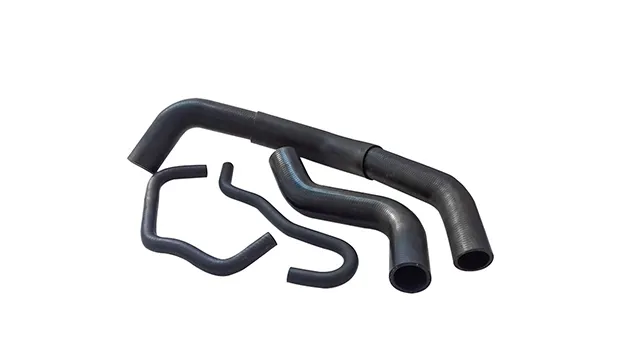
When customizing industrial rubber parts, one technical parameter that determines nearly all end-product performance is rubber hardness (Shore A). Many overseas buyers focus heavily on material type, size, and tolerance but overlook hardness matching — which often leads to poor sealing, insufficient shock absorption, short service life, or even assembly failure.
For custom rubber seals, gaskets, bumpers, and vibration pads, Shore A hardness is the core standard to balance elasticity, compression resistance, fit tolerance, and load-bearing capacity. This article explains how Shore A hardness affects sealing and shock-absorbing performance, helping you select the most suitable hardness for your industrial and automotive rubber components.
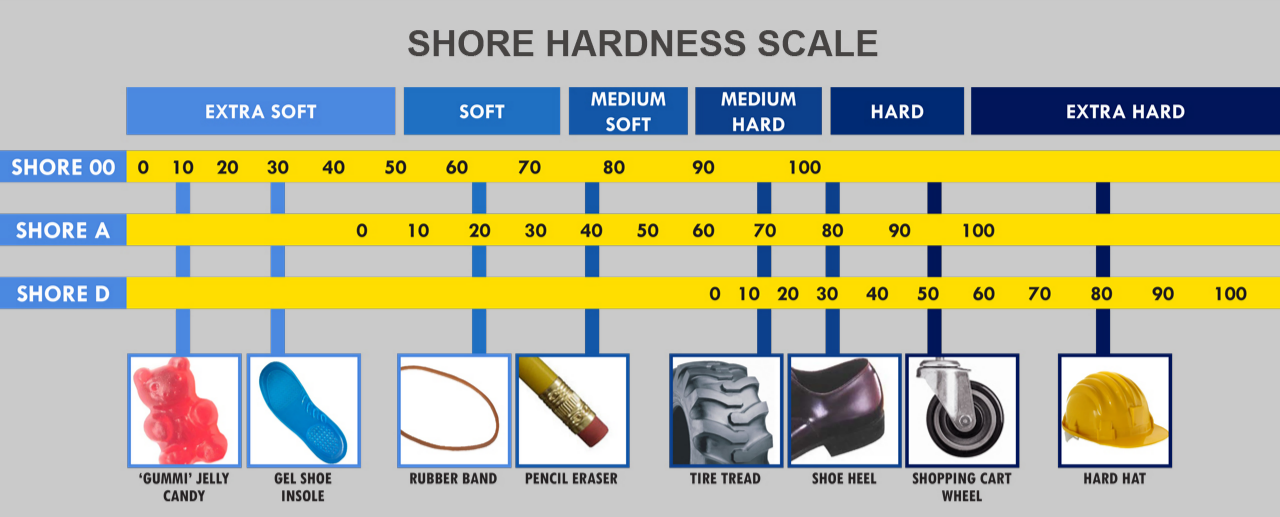
Shore A is the most commonly used hardness test scale for flexible rubber, elastomers, and soft plastic materials. The value ranges from 0 (softest) to 100 (hardest). Most industrial rubber custom parts fall between 30A and 90A.
Simply put: Lower Shore A = softer, more elastic, better fit; Higher Shore A = harder, sturdier, more pressure-resistant.
Sealing reliability depends on surface fitting ability and compression resilience. Hardness directly controls these two features.
1. Soft rubber (30A–50A): Excellent sealing for uneven surfaces
Soft rubber features high flexibility and low compression force. It can fill tiny gaps, scratches, and uneven joint surfaces perfectly, providing outstanding waterproof, dustproof, and airtight effects. It is ideal for static sealing scenarios with low pressure and strict leakage prevention requirements.
Common applications: Window & door EPDM seals, container gaskets, household appliance sealing rings, low-pressure pipe gaskets.
2. Medium hardness rubber (55A–70A): Best balanced sealing solution
This range is the most popular for industrial customization. It maintains good elasticity while possessing certain anti-compression and anti-deformation capabilities. It avoids the problem of overly soft rubber being easily squeezed out or deformed under medium pressure.
Common applications: Automotive door seals, hydraulic system gaskets, mechanical static sealing parts.
3. Hard rubber (75A–90A): Poor elasticity, only for high-pressure support sealing
Hard rubber is not easy to deform, so it cannot fit tiny gaps well. Its sealing performance is weaker than soft rubber. However, it can resist high pressure and extrusion, making it suitable for high-pressure dynamic sealing that requires structural support.
Shock absorption relies on rubber elasticity and energy absorption. Hardness mismatch is the top cause of ineffective vibration reduction and part fatigue damage.
1. Soft rubber (30A–50A): Good vibration absorption for light load
Soft rubber can absorb subtle vibration and noise effectively. But under heavy load, it will be excessively compressed, resulting in bottoming out and losing shock resistance.
2. Medium-hard rubber (60A–75A): Best for standard shock mounts
This hardness balances buffer effect and structural stability. It can absorb mechanical vibration while resisting continuous compression deformation, which is widely used in automotive and machinery shock-absorbing parts.
3. Hard rubber (80A–90A): Strong load-bearing, weak buffer performance
Hard rubber is suitable for heavy-duty equipment support, but it cannot absorb vibration well. Too hard rubber will cause rigid collision and amplify equipment noise.
Common Hardness Matching Guidelines for Custom Rubber Parts
• Weather seals, container gaskets, dust seals: 35A–50A
• Automotive sealing gaskets, ordinary O-rings: 55A–65A
• General machinery shock pads, vibration mounts: 60A–70A
• High-pressure resistant gaskets, anti-extrusion parts: 70A–85A
As a professional OEM & ODM rubber custom manufacturer, we do not use fixed-standard rubber materials. According to your usage scenario, pressure load, temperature environment, and functional requirements, we can customize precise Shore A hardness from 30A to 90A for EPDM, NBR, silicone, NR, and composite rubber materials.
We strictly test hardness stability, compression set, resilience, and weather resistance for each batch of products to ensure consistent sealing and shock-absorbing performance in long-term outdoor and industrial working conditions.
If you are not sure which hardness is suitable for your custom rubber parts, feel free to contact our technical team for free professional matching suggestions.