When it comes to custom molded rubber products, accuracy is the key to ensuring product quality and assembly performance. Whether it is a rubber gasket, a shock absorber, or a sealing ring, even a small dimensional deviation may lead to assembly failure, affecting the normal operation of the entire equipment. Among the many factors that affect the dimensional accuracy of custom molded rubber products, the rubber shrinkage rate is undoubtedly the most critical one. For overseas buyers and procurement engineers who need custom rubber products, understanding the rubber shrinkage rate and its influencing factors is essential to avoid cooperation risks and ensure product compliance. Today, we will systematically explain what rubber shrinkage rate is, why it is important, and how to control it in the production process.
First, let’s clarify the definition of rubber shrinkage rate. Rubber shrinkage rate refers to the percentage of the dimensional difference between the rubber product after it is vulcanized and cooled to room temperature and the size of the mold cavity. In simple terms, when the rubber is heated and vulcanized in the mold, it will expand due to heat; after being demolded, it will shrink gradually as it cools, and the final size will be slightly smaller than the mold size. The shrinkage rate is the ratio of this shrinkage amount to the mold size, usually expressed as a percentage. For example, if the mold size is 100mm, and the product size after cooling is 99mm, the shrinkage rate is 1%.
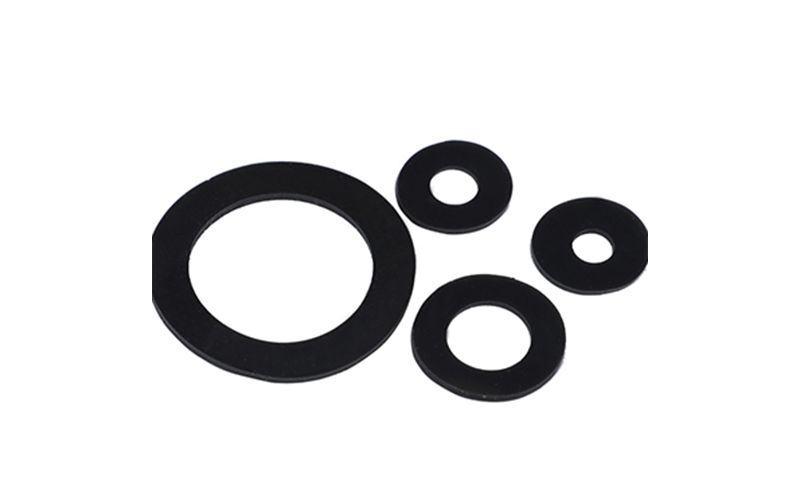
Why is the rubber shrinkage rate a critical factor for custom molded rubber products? Because for most industrial equipment, automotive parts, and mechanical components, the assembly of rubber products has strict dimensional requirements. If the shrinkage rate is not controlled properly, the product will be too large or too small: if it is too large, it will be difficult to assemble, or even damage the mating parts; if it is too small, it will not achieve the required sealing, shock absorption, or other functions, leading to equipment failure. For example, a custom rubber gasket used in a pipeline connection, if the shrinkage rate is too high, the gasket will be too small to fit the pipeline interface, resulting in leakage; if the shrinkage rate is too low, the gasket will be too tight, making assembly difficult and even damaging the pipeline.
Next, let’s understand the main factors that affect the rubber shrinkage rate. Mastering these factors can help you better communicate with the manufacturer and put forward accurate customization requirements.
1. Rubber material type: Different rubber materials have different shrinkage rates. For example, natural rubber has a relatively high shrinkage rate, usually between 2%-3%; EPDM rubber has a medium shrinkage rate, about 1.5%-2.5%; silicone rubber has a higher shrinkage rate, generally 3%-4%; while nitrile rubber (NBR) has a shrinkage rate of about 1.5%-2%. The difference in shrinkage rate is mainly due to the molecular structure of the rubber, the degree of cross-linking during vulcanization, and the elasticity of the material.
2. Vulcanization process parameters: Vulcanization temperature, vulcanization time, and vulcanization pressure are important factors affecting the shrinkage rate. Higher vulcanization temperature will lead to greater thermal expansion of the rubber, and the shrinkage rate after cooling will also increase; too long vulcanization time will make the rubber cross-linking degree too high, reducing the shrinkage rate; insufficient vulcanization pressure will lead to uneven density of the rubber product, resulting in uneven shrinkage and dimensional deviation.
3. Product structure and size: The thickness, shape, and size of the rubber product will also affect the shrinkage rate. Thicker products have slower heat dissipation during cooling, and the shrinkage rate is usually higher than that of thinner products; products with complex shapes (such as those with holes, grooves, or irregular structures) will have uneven shrinkage due to uneven stress during vulcanization and cooling, which is more difficult to control.
4. Mold design: The design of the mold, including the mold cavity size, demolding angle, and exhaust system, will also affect the shrinkage rate. A reasonable mold design can reduce the resistance during demolding, avoid excessive stress on the product, and ensure uniform shrinkage.
As a professional custom molded rubber products factory, we have mature technology and rich experience in controlling the rubber shrinkage rate. In the production process, we will take the following measures to ensure the dimensional accuracy of the products:
First, we will select the appropriate rubber material according to the customer’s product requirements and use scenarios, and accurately calculate the shrinkage rate of the material through a large number of experiments. Second, we will optimize the vulcanization process parameters, adjust the vulcanization temperature, time, and pressure according to the material type and product structure, to ensure uniform vulcanization and stable shrinkage. Third, we will design the mold reasonably, reserve the corresponding shrinkage margin according to the calculated shrinkage rate, and set a reasonable demolding angle and exhaust system to avoid dimensional deviation caused by mold problems. Finally, we will conduct strict dimensional inspection on each batch of products, using professional testing equipment to ensure that the product size meets the customer’s drawings and requirements.
For overseas buyers who need custom molded rubber products, it is very important to provide clear product requirements and communicate with the manufacturer about the shrinkage rate. When you put forward customization requirements, we will provide you with professional suggestions based on your product’s use scenario, material selection, and dimensional requirements, help you determine the reasonable shrinkage rate, and ensure that the final product can perfectly meet your assembly needs.
If you have questions about the rubber shrinkage rate, or need to customize molded rubber products with high dimensional accuracy, please contact us. Our technical team will provide you with one-stop solutions, from material selection, mold design to production and testing, to ensure that your customized products are of high quality and meet your expectations.